
A Decade in Books: 2019
When I look at the list of books I read in 2019 I feel a little disappointed because I find that I didn’t finish enough books: 26, which averages to one every two weeks. I could blame work, I could blame writing, I could blame a commute that’s just a little too short (that would be silly, no one complains their commute is too short), I could blame podcasts. But in the end, I just have to remind myself that it’s not how many books you read in the year that matters, but whether or not they were any good.
2019 is the year I joined a book club here in Paris, something I’d never really done before. That’s what led me to read Saramago’s The Gospel According to Jesus Christ and Peter Carey’s Oscar and Lucinda. There’s a certain joy to reading and discussing books you wouldn’t necessarily have picked up otherwise. I went through a short-lived Saramago phase when I was eighteen, so I was eager to read more of his work, but I have to say his novel about Jesus did not quite enthral me as much as I thought it would. I hope I won’t be put off from reading more of his novels, since there are many others that look interesting. As for Peter Carey, well I’d never read him before but I had heard a lot about him — booker favourite that he is — so I was excited to finally getting around to his work. The irony, in fact, is that because of some scheduling issue I couldn’t actually make it to the book club meeting where Oscar and Lucinda was discussed, although I did in fact finish the novel. I liked it a lot, although it’s a shame I didn’t get to discuss it because it raised many questions for me. For instance, I wondered why it took so long before the two main characters got to meet… And I couldn’t help but be overwhelmingly impressed with Carey’s imagination and verve, his ability to build a completely believable 19th century world, populated by a cast of insanely Dickensian characters, in England and in Australia. I cannot wait to read more of Carey’s books, especially his other Booker winner: True History of the Kelly Gang.
When I look at the books I read at the end of the decade, I see three beautiful, overlapping trilogies: Rachel Cusk’s Outline series, which broke new ground in auto-fiction and wonderfully smart feminist rage; N.K. Jemisin’s fantasy series The Broken Earth, about a collapsing world and a broken family; and Cixin Liu’s breathtaking, messy science fiction trilogy The Remembrance of Earth’s Past. When I was reading Cusk, I felt like whole new avenues for fiction and storytelling were opening up. For the most part I wondered how she could write something so compelling with a narrator who, for the most part, erases herself in the face others and their stories. Jemisin’s trilogy captivated me, especially the first book which plays so cleverly with timelines and characters. The world she creates and the emotional themes she delves into — especially around loss — are beautiful and terrifying. As for Liu, the high-level concepts and pieces of incredible technology he describes in his books — and which he manages to do it in a very clear, understandable way — is mind-blowing, for lack of a better term. I felt like he forced my brain, and the possibilities it could muster, to expand.
What else? Well, 2019 was the year that Margaret Atwood weirdly won the Booker again (jointly this time) for her sequel to The Handmaid’s Tale. The Testaments was a storm of a book, but I found it a little too drily plotted for my taste. Knowing that it was coming and that I would want to read it, though, I reread The Handmaid’s Tale in preparation, and what a pleasure that was. The world it creates still holds up so well, but it’s the language that makes that book a winner: the beautiful interiority of the narrator as she goes about her dreadful days, wondering and worrying.
2019 is also the year I got around to reading Proust for the first time. I was always a bit daunted by Proust but I had a feeling that I would end up loving his work. My dream has often been to spend an entire summer out in the country somewhere, lazily but unwaveringly making my way through À la recherche. Alas, what a disappointment! There were one or two bits of the first novel that I did enjoy, but I found the rest exceedingly boring. My main complaint was that he seems to focus all his attention on the most mundane, boring things, and skips over every important plot point casually. It’s like he wants it to be about nothing. Maybe that’s the point, and if so I have to simply admit that, at this time in my life, Proust is beyond me.
The previous year, in 2018, when G. and I were living in Egypt, we read New Yorker articles by the extraordinary Peter Hessler, using them as keys to decipher aspects of Egyptian society: women, money & class, politics… His book The Buried sort of mashes together a bunch of that writing and weaves it with added material, creating a larger narrative about Egyptian society and setting the 2011 Revolution into historical trends, going all the way back to the time of the pharaohs. Hessler writes beautifully and his book is in turns funny and sad; I had a lot of fun reading it to G. at night before bed. It was a pleasure to rediscover some of the wonderful characters from his New Yorker articles in the book, like the epic tale of the neighbourhood garbage collector whom Hessler befriends, and who is locked in a years-long marital battle with his young, educated wife.
Soon the decade came to a close. We returned home, to Canada, for our usual two week trip for the holidays — unbeknownst to us, it was the last time we would be back home before the pandemic of 2020. The last book I read that year was Philip Pullman’s The Secret Commonwealth, in which he returns to the universe he created in The Golden Compass to continue the story of Lyra Belacqua, seven years after the events with which his trilogy His Dark Materials ended. I inhaled his new book, finding it absorbing and moving and beautifully written, bursting with imagination and wonder. It’s dark, of course, in some ways much darker than the original trilogy, at least in its psychology, but what it really was for me was a statement about the power of storytelling. It’s also a book about movement, travel, and meetings: a wonderful way to end a meandering decade.
Reading List: 2019
Keith Maillard, Twin Studies
Annie Ernaux, Les Années
Jim Shepard, The Book of Aron
Philippe Lançon, Le Lambeau
Eugène Dabit, L’Hôtel du Nord
Helen DeWitt, The Last Samurai
Michael Ondaatje, In the Skin of a Lion
Lawrence Wright, The Terror Years
Ian McEwan, Machines Like Me
Maurice Druon, Les Rois Maudits 1: Le Roi de fer
Gustave Flaubert, Bouvard et Pécuchet
Rachel Cusk, Kudos
Cixin Liu, Death’s End
Mitchell Abidor, May Made Me
Patrick Modiano, Rue des boutiques obscures
Ed. Mark Edele, Sheila F, A. Grosmann, Shelter from the Holocaust
Ted Chiang, Exhalation
N.K. Jemisin, The Obelisk Gate
Henryk Greenberg, Children of Zion (transl. J. Mitchell)
Margaret Atwood, The Handmaid’s Tale
José Saramago, The Gospel According to Jesus Christ
Peter Hessler, The Buried
Peter Carey, Oscar and Lucinda
Marcel Proust, Du côté de chez Swann
Margaret Atwood, The Testaments
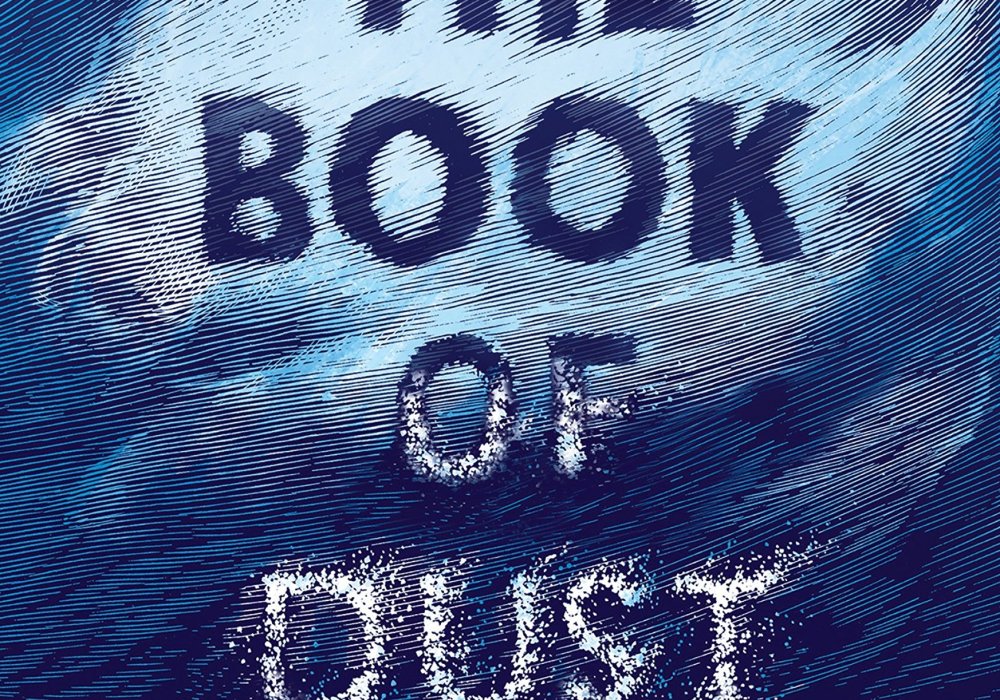
Philip Pullman, The Book of Dust 2: The Secret Commonwealth


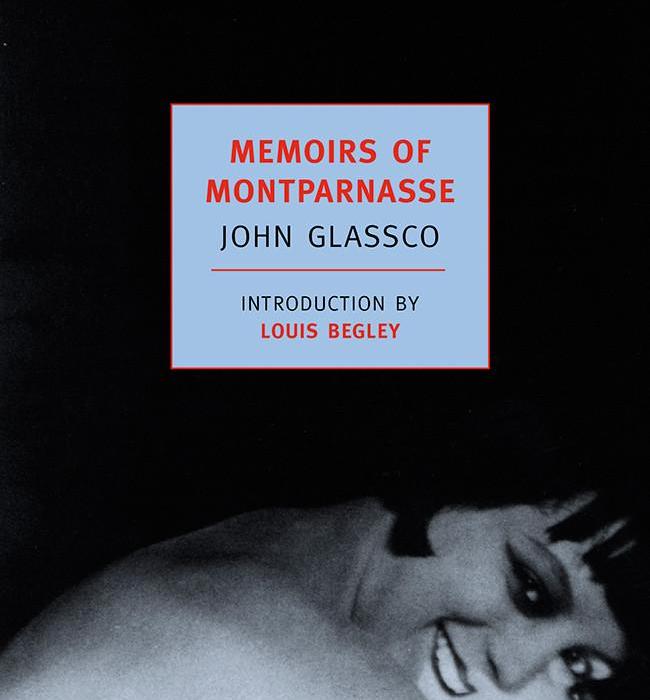

 A Moveable Feast, by Ernest Hemingway
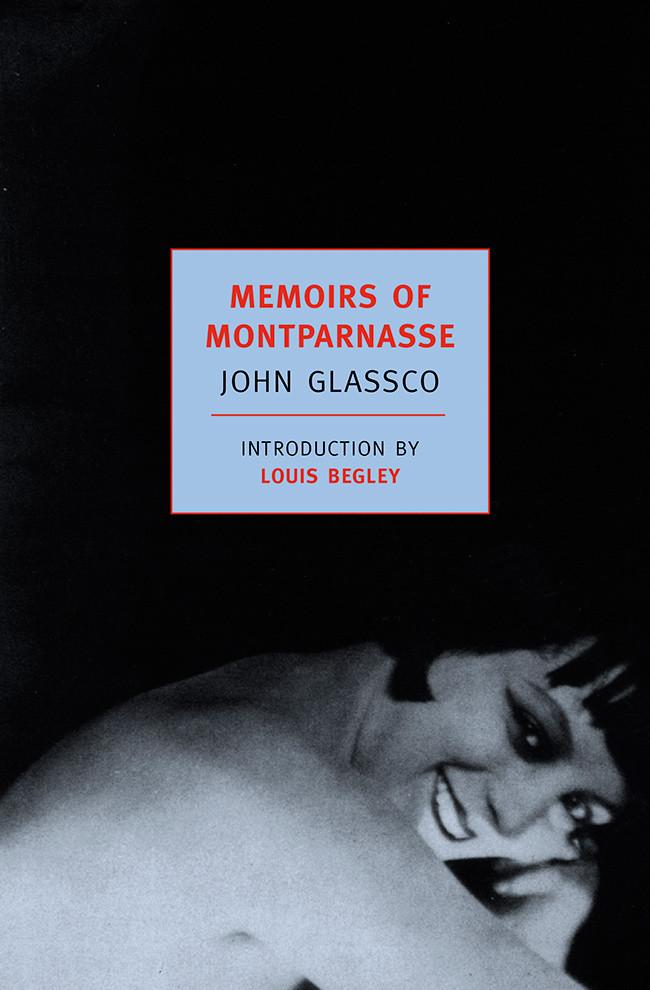 I haven’t re-read this book yet but brought it with me to Paris to do so. I remember it being even better than Hemingway’s memoir when I read it in my early twenties. Glassco was a Canadian poet who also escaped to Montparnasse between the wars when he was just seventeen, and wrote his memoir of that time when he was living out his middle age in the Eastern Townships, on long afternoons buoyed by gin. Glassco’s account is somewhat fictionalized, but it’s a great read with fantastic sweep, and lots of charming raunch.
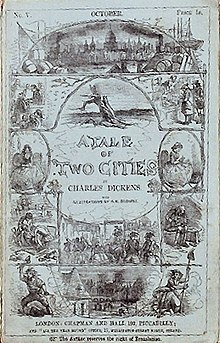 I’d long meant to read this Dickens, for the most part because it’s among his shorter novels. As I was reading it this summer I did wonder where he was going with the crazy plot for most of the book, but by the end all of the pieces he had set up in the first part did come together and the story clicked into gear towards a satisfying ending. Dickens doesn’t really take the time describe Paris very well, but his vicious take on both the corrupted aristocracy and the blood-thirty crowds of revolutionaries is fun. He spares no one–as long as they’re French! I’m growing a bit tired of Dickens’ female characters, however, who are always based on the same sweet passive model.
 This is one of James’ late, great masterpieces, and is the ultimate arriving-in-Paris read, so much so that I’ve been slowly savouring it since we arrived. James himself said that the best way to enjoy his books was to read about five pages a day, but to keep at it “without losing the thread.” In The Ambassadors, a wealthy American woman sends her middle-aged suitor, Strether, to Paris to convince her son, who may or may not be having an affair with a rich countess, to return to America. But then, against all odds, Strether begins to fall in love with Paris–the food, the artwork, the architecture, the atmosphere. As the novel progresses, it’s unclear who is corrupting whom. The pleasure of the novel is in witnessing Strether’s slow transformation, which sometimes looks more like self-delusion. The dialogues are also wonderfully witty.
 Geoff Dyer is one of those writers that I’m still not sure what to make of. I read his books and I can’t say I enjoy them, exactly, but they make me think, and I do keep coming back to his work. I picked this novel up by chance when I saw it at Blackwell’s in Oxford this summer. What a treat: compulsive, self-aware, elegantly written, sexy, melancholy. It’s about a group of expat friends living from party to party in Paris in the 1990s, and the inevitable moment when the parties have to end. Dyer is better known for his non-fiction, but this novel proves he can do fiction just as well.
 A follow-up to Binet’s sometimes frustrating but nonetheless compelling HHhH, his second novel is a crazy romp through the world of French philosophers in the early 80s. It begins with a simple but intriguing premise: the influential literary critic Roland Barthes died in 1980, struck by a van–what if he was actually murdered? The story is fast-paced and, in the end, becomes a little too heavy handed in its pastiche of Dan Brown-esque conspiracy thrillers, but the early scenes set in the houses and university offices of the likes of Derrida, Foucault, Deleuze, and Kristeva are a delight. My favourite cameo is by Umberto Eco, who is, of course, the smartest of them all.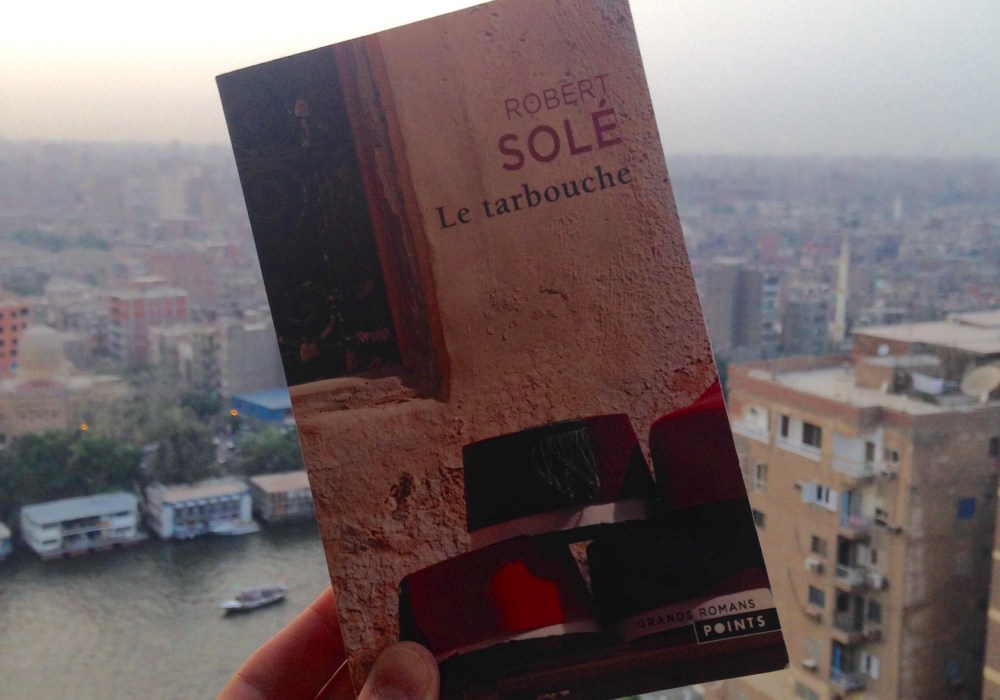
 Charles-Adam Foster-Simard