
A Decade in Books: 2011
In 2010, I started keeping track of all the books I read in a notebook. Now, ten years later, I’ve decided to look back at my List of Books of Read from the decade to see what I remember, what has stayed with me, and what I’ve forgotten.
In January 2011 I returned to the UK to complete my year abroad. Once again many of the books I read were dictated by the classes I took, in this case a class on Shakespeare, which made me to read many of the plays I’d never picked up before, and a class on the Uncanny, which explains the Dickens, the Elizabeth Bowen, and the Virginia Woolf early in the list.
What else? Well it’s obvious that my classes at the University of Bristol were not taking up all my reading time, because I still read for pleasure: Down and Out in Paris and London, Alberto Manguel, Muriel Spark, The Master and Margarita. Come to think of it those last two would’ve fit well in the reading list for a class on the uncanny, but I distinctly remember picking them up for myself, and loving them.
In the very early weeks of 2011, G. and I spent a few days on holiday in Paris before returning to Bristol. I quite enjoy seeing books like The Measure of Paris and Down and Out in Paris in London all these years later, now I’m actually living here in Paris–something I could’ve never guessed back then.
For my birthday G. offered me a Year of Reading from an amazing book store in Bath called Mr. B’s Emporium of Reading Delights. The concept is that I had a short conversation with a “literary therapist” at the bookstore, who then sent me a novel tailored to my tastes every month. I distinctly remember reading Gould’s Book of Fish in a deer park in Bristol, and finding it both strange and wonderful. Of course several years later Richard Flanagan would win the Booker prize for another novel about building a railroad in the middle of the jungle–and I was glad to have discovered him a few years back thanks to this gift.
G. and I both fell hard for Umberto Eco’s The Mysterious Flame of Queen Loana that year, which is a beautiful book and beautifully told, and also one of his most accessible novels, although I believe it’s one that didn’t get a lot of attention. The last book I read in Bristol was Middlemarch, which I loved and have promised myself to reread since. In fact I finished reading it back home in Québec, so it straddles by last days in the UK and my return home.
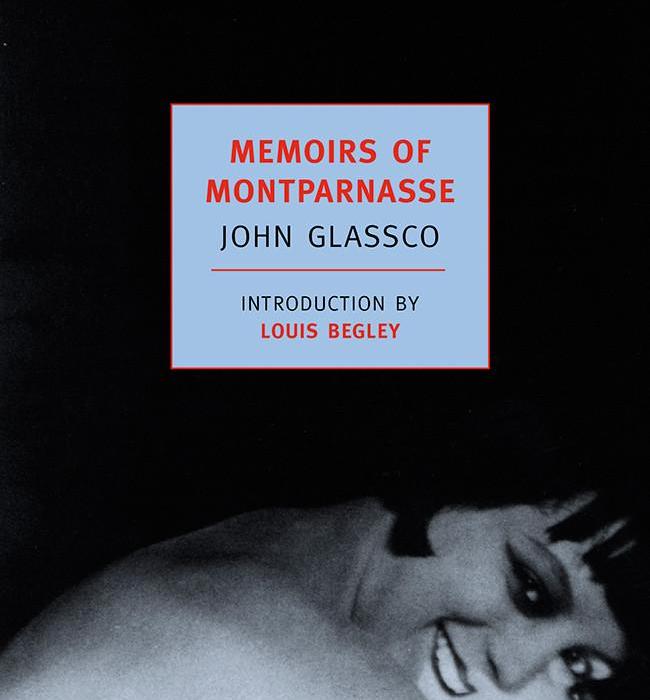
As I returned to McGill in September and a slightly more rigorous academic schedule, my readings became dominated by two classes in particular: one on Canadian Modernism, and the other on the nature of Autobiography. So you see Marguerite Yourcenar’s Memoirs of Hadrien, which is of course fictional, mixed in with autobiographical books by Sartre and de Beauvoir, interwoven with less known Canadian classics like John Glassco, Sheila Watson, Ethel Wilson, and Ernest Buckler. In fact one class ended up feeding into the other, as I wrote the final essay for the class on autobiography on John Glassco’s Memoir’s of Montparnasse, which is a wonderful non-fiction book about his youth in Paris, but is interesting because it was highly fictionalized.
I enjoyed many of the novels I read for the class on Canadian modernism, but the one that stayed with me the most was Leonard Cohen’s Beautiful Losers, which is so energetic and wild, and also addresses many interesting political and cultural topics relevant to Quebec in the 1960s. I would incorporate many of these themes in my own writing as I prepared to undertake an MFA in creative writing after finishing my undergraduate degree.
Reading List: 2011
Perrine Leblanc, L’Homme blanc
Stephen Scobie, The Measure of Paris
Henry James, The Golden Bowl
Antoine de Saint-Exupery, Terre des hommes
George Orwell, Down and Out in Paris and London
William Shakespeare, The Taming of the Shrew
William Shakespeare, A Midsummer Night’s Dream
Euripides, Grief Lessons: Four Plays (Translated by Anne Carson)
Colm Tóibín, The Master
William Shakespeare, As You Like It
Alberto Manguel, A Reading Diary
William Shakespeare, Hamlet
Charles Dickens, The Mystery of Edwin Drood
William Shakespeare, Richard II
Ferenc Karinthy, Metropole
Lewis Carroll, Alice’s Adventures in Wonderland and Through the Looking Glass
Muriel Spark, Memento Mori
William Shakespeare, King Lear
William Shakespeare, Measure for Measure
Elizabeth Bowen, The House in Paris
Lewis Buzbee, The Yellow-Lighted Bookshop
Diana Athill, Instead of a Letter
Mikhael Bulgakov, The Master and Margarita
John Updike, Rich in Russia
Sue Gee, Reading in Bed
William Shakespeare, Twelfth Night
Virginia Woolf, Orlando
William Shakespeare, The Tempest
Margaret Atwood, The Year of the Flood
Dinaw Mengestu, Children of the Revolution
Richard Flanagan, Gould’s Book of Fish
Carl-Johan Vallgren, Rubashov the Gambler
Umberto Eco, The Mysterious Flame of Queen Loana
Henry de Montherlant, Chaos and Night
George Eliot, Middlemarch
Gabriel Zaid, So Many Books
Gustave Flaubert, L’éducation sentimentale
Jacques Poulin, Les yeux bleus de Mistassini
David Gilmour, The Film Club
Jorge Luis Borges, Poems of the Night
Javier Marias, Your Face Tomorrow 1: Fever and Spear
Wolfgang Schivelbusch, Tastes of Paradise
Marguerite Yourcenar, Mémoires d’Hadrien
Ernest Buckler, The Mountain and the Valley
Ethel Wilson, The Equations of Love
John Glassco, Selected Poems
Sheila Watson, The Double Hook
Leonard Cohen, Beautiful Losers
Jean-Paul Sartre, Les Mots
Simone de Beauvoir, Mémoires d’une jeune fille rangée
Alberto Manguel et Claude Rouquet, Conversations avec un ami
Pietro Grossi, The Break
Frank O’Connor, Selected Stories

 A Moveable Feast, by Ernest Hemingway
 I haven’t re-read this book yet but brought it with me to Paris to do so. I remember it being even better than Hemingway’s memoir when I read it in my early twenties. Glassco was a Canadian poet who also escaped to Montparnasse between the wars when he was just seventeen, and wrote his memoir of that time when he was living out his middle age in the Eastern Townships, on long afternoons buoyed by gin. Glassco’s account is somewhat fictionalized, but it’s a great read with fantastic sweep, and lots of charming raunch.
 I’d long meant to read this Dickens, for the most part because it’s among his shorter novels. As I was reading it this summer I did wonder where he was going with the crazy plot for most of the book, but by the end all of the pieces he had set up in the first part did come together and the story clicked into gear towards a satisfying ending. Dickens doesn’t really take the time describe Paris very well, but his vicious take on both the corrupted aristocracy and the blood-thirty crowds of revolutionaries is fun. He spares no one–as long as they’re French! I’m growing a bit tired of Dickens’ female characters, however, who are always based on the same sweet passive model.
 This is one of James’ late, great masterpieces, and is the ultimate arriving-in-Paris read, so much so that I’ve been slowly savouring it since we arrived. James himself said that the best way to enjoy his books was to read about five pages a day, but to keep at it “without losing the thread.” In The Ambassadors, a wealthy American woman sends her middle-aged suitor, Strether, to Paris to convince her son, who may or may not be having an affair with a rich countess, to return to America. But then, against all odds, Strether begins to fall in love with Paris–the food, the artwork, the architecture, the atmosphere. As the novel progresses, it’s unclear who is corrupting whom. The pleasure of the novel is in witnessing Strether’s slow transformation, which sometimes looks more like self-delusion. The dialogues are also wonderfully witty.
 Geoff Dyer is one of those writers that I’m still not sure what to make of. I read his books and I can’t say I enjoy them, exactly, but they make me think, and I do keep coming back to his work. I picked this novel up by chance when I saw it at Blackwell’s in Oxford this summer. What a treat: compulsive, self-aware, elegantly written, sexy, melancholy. It’s about a group of expat friends living from party to party in Paris in the 1990s, and the inevitable moment when the parties have to end. Dyer is better known for his non-fiction, but this novel proves he can do fiction just as well.
 A follow-up to Binet’s sometimes frustrating but nonetheless compelling HHhH, his second novel is a crazy romp through the world of French philosophers in the early 80s. It begins with a simple but intriguing premise: the influential literary critic Roland Barthes died in 1980, struck by a van–what if he was actually murdered? The story is fast-paced and, in the end, becomes a little too heavy handed in its pastiche of Dan Brown-esque conspiracy thrillers, but the early scenes set in the houses and university offices of the likes of Derrida, Foucault, Deleuze, and Kristeva are a delight. My favourite cameo is by Umberto Eco, who is, of course, the smartest of them all.
 Charles-Adam Foster-Simard