Our Christmas Menu
Like so many people around the world, we spent the 2020 Holidays far from our families. In fact, it was the first time I’ve ever spent Christmas away from my family and outside of Québec. G. and I decided to make the best of the situation, and we spent much of December decorating, shopping, and planning our own Christmas celebrations.
The rules in France allowed for up to six people to meet for dinner on Christmas Eve — the only day during the current “lockdown” period when the usual 8 p.m. curfew was lifted. We invited four of our friends over to our apartment, dressed the table with vintage crystal and porcelain and heaps of wintry leaves, and planned an extra-special meal for the occasion.

We hesitated at first about what exactly we wanted to cook. I initially had an idea for a traditional, vegetarian British-style Christmas meal with a nut roast, roasted potatoes, a parsnip purée, and gravy. G. on the other hand wanted to make a saumon en croûte, a sort of salmon wellington, which felt festive and special. But in the end, and after consulting with some French people like G.’s hairdresser, we felt it was more appropriate to go down the traditional French route, which means seafood and foie gras. The added advantage was that we could easily order things, prepare what needed to be prepared in advance, and the meal itself required almost no cooking.
Our feast started with a specially crafted Christmas cocktail. I love making up cocktails for specific occasions, so I thought long and hard about what I wanted to make for Christmas this year. I went down the route of the whiskey sour, feeling that the citrus element was nice and sharp to start the meal, and there was something quite cheerful about the foamy egg white. To make it more seasonal I used some bergamot juice in addition to the lemon juice, and I infused my simple syrup with ginger and bergamot peel as well to get more depth of flavour. The make it more festive I finished it with a star anise floating in the froth. It was delicious and a nice way to welcome our guests.
Although we wanted to go down the traditional French route with our meal, we started with an exotic twist: as one of our friends is from Columbia, his partner wanted to treat him to some Columbian snacks, so the appetizers were traditional Columbian goodies she had ordered from a specialist caterer in Paris: empanads, pan de bonos, patacones, and yuca fries. We ate these tasty snacks with some Pierre Gimonnet champagne we picked up in Epernay when we went there for a weekend back in the fall, before France returned in lockdown.
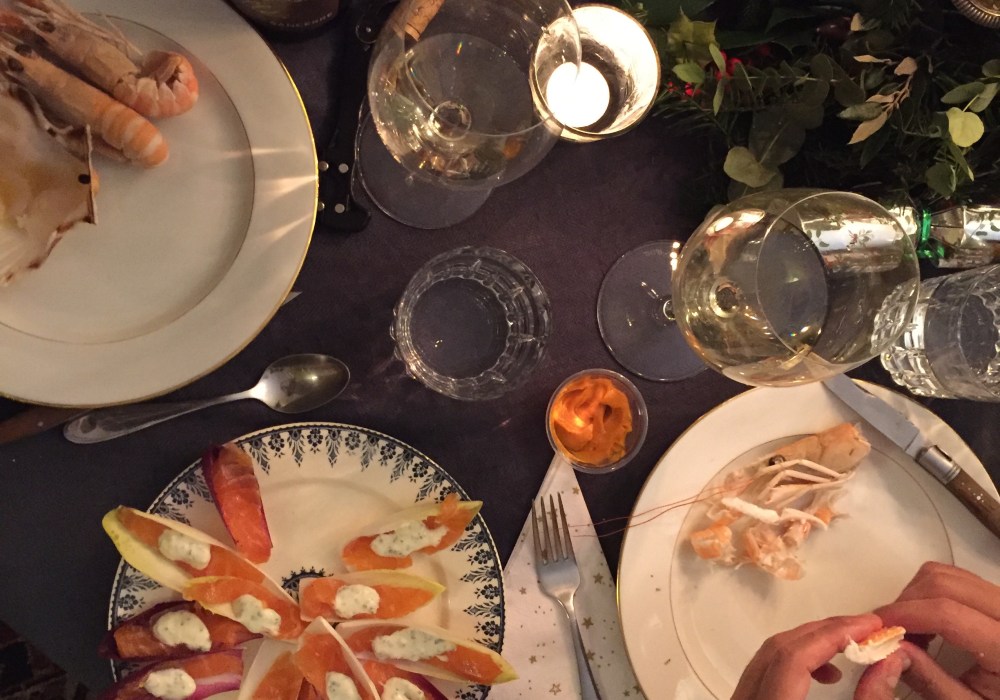
We then sat down for our feast of the sea. We had ordered oysters from a local restaurant that has converted itself to selling baskets of dairy products, fruit & veg, and seafood from their producers while the restaurant is closed. Langoustines with spicy mayo and scallop sashimi came from Sur Mer, another local restaurant that currently offers takeaway meals and seafood platters. The scallop, served raw, thinly sliced in its shell and accompanied with its sharp little dressing, was definitely one of the highlights.

I had prepared two fish elements the day before: salmon gravlax and a smoked haddock rillette. I love making salmon gravlax and I find it to be a perfect Holiday appetizer, and I’ve made some in the past with juniper, gin, and beetroot which tints the salmon flesh a beautiful pink colour. But this year I wanted a cleaner, fresh taste so I went with lemon zest, pink peppercorn, and a little bit of ground coriander seeds as my aromatics. It was delicious sliced very thin on bitter red and white endive leaves with little dollops of crème fraîche with some lemon zest and chives mixed in it. The smoked haddock rillette was something I’d never done before, and I don’t quite know where I got the idea for it but it seemed right, and it ended up being one of the more popular things on our menu! I simply bought some smoked haddock fillet, I cooked them gently in milk, then flaked the flesh and mixed it with some home made mayonnaise, a bit of lemon juice, pepper, and a chopped chives. Delicious spread on some croutons!
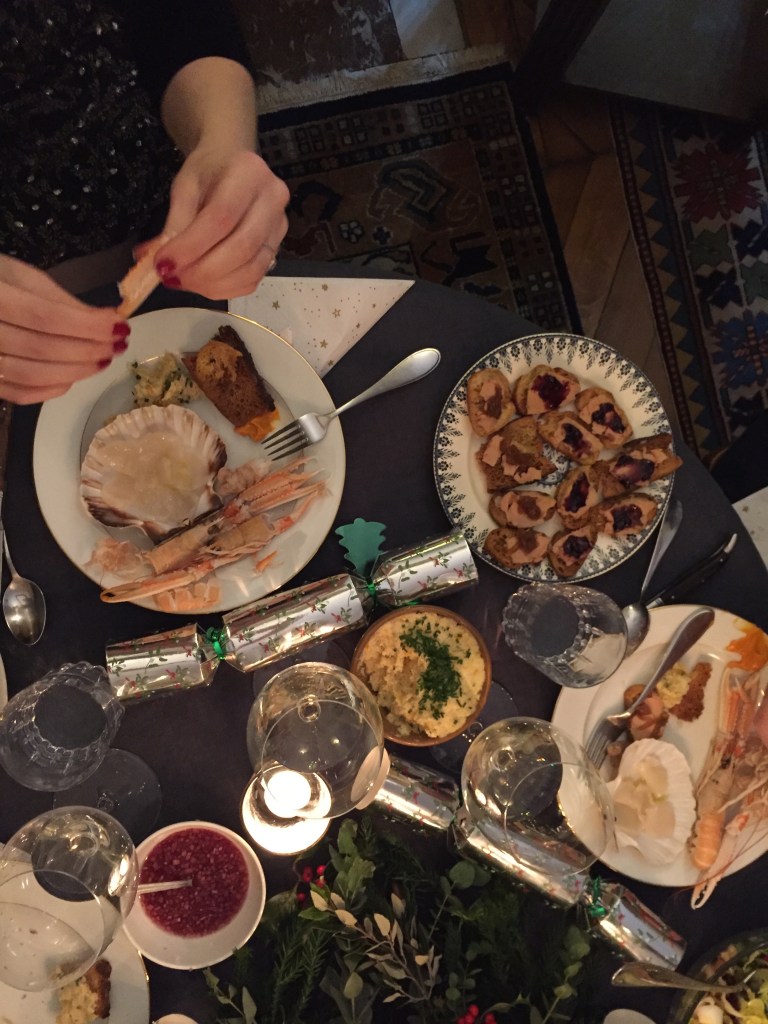
In addition, I also picked up some duck mi-cuit foie gras at the Grande Épicerie when I went to do some Christmas shopping there earlier in December, so I served some of that on toast with dabs of onion chutney and cherry compote. Our friend also brought some fois gras along so we had more than enough and I still have some leftover in the fridge.
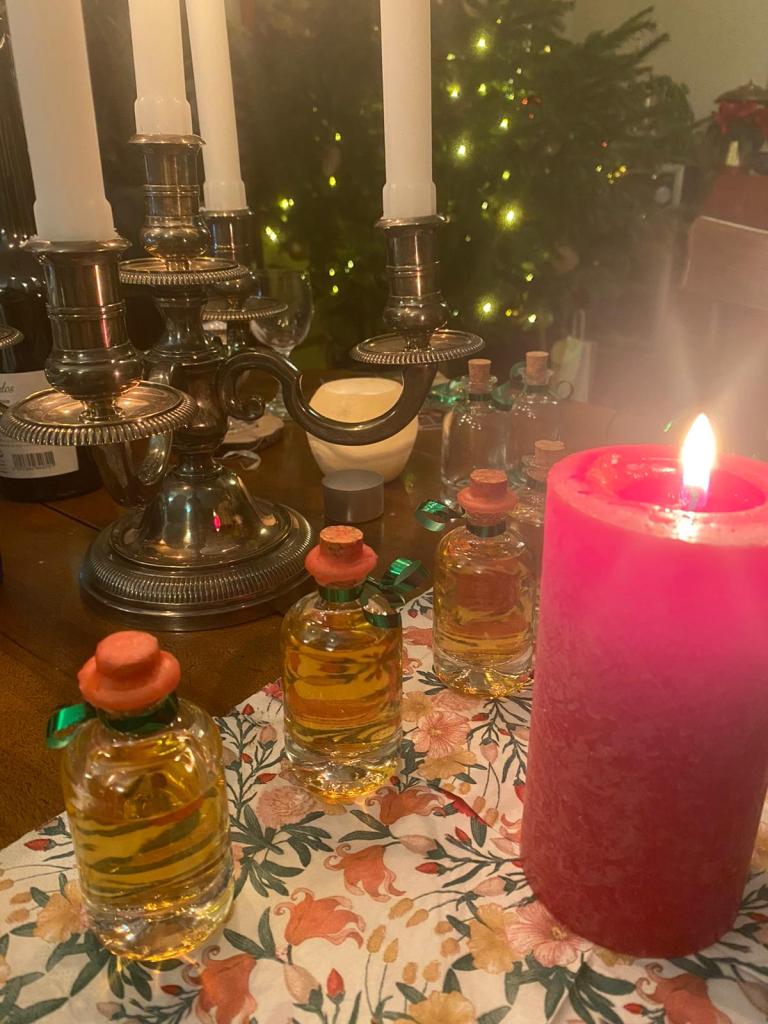
G. loves the British tradition of Christmas crackers, and she wanted to make them extra special this year so she ordered some that came still open and only had the joke and the paper crowns in them. We filled them with some nougats and caramel au beurre salé from George Larnicol, our favorite chocolatier. G. also prepared a special surprise for the digestif: she filled little glass bottles with a selection of brown alcohols — for example calvados, whiskey, rum and armagnac — then numbered and sealed the bottles with wax. We each had to guess what alcohol we had. As it turned out, only one of us got it right! It was a fun game to add some entertainment and joy to the evening, in addition to a more traditional blind gift exchange.
After a cheese course of Morbier and Mont d’Or, we dug into our bûche: a classic French Christmas dessert (also traditional in Québec) which is basically a cake in the form of a log, which can often be rolled. My mother usually makes a delicious chocolate, mint, and vanilla ice-cream bûche for Christmas, and I toyed with the idea of trying to make it, but I decided that I could never make anything as good as what I could buy in Paris!
Every chocolatier, bakery, and pastry shop has their own selection of bûche and I spent a good part of December agonizing about which one I wanted, comparing designs and flavour profiles, until I decided to contact our favourite pâtisserie shop, Muscade, located in the Jardin du Palais-Royal. They’re particularly good at adding modern twists to traditional desserts. It turned out that they did have a Christmas bûche that fit what we were looking for: inspired by a Mont Blanc, it had a bit of meringue with lots of chestnut mousse and cream, and some sharp passion fruit gel in the middle to offset the sweetness. It was the right choice and the perfect way to end the meal.

Although we were very sad not to be able to spend precious time with our families this year, it was nice to be able to organize the celebration we wanted (within the restrictions, of course) and make the most of some of the beautiful products and traditions of France. Given the circumstances, we wanted to organize a party that was fun and memorable, and I think we managed it!






 A Moveable Feast, by Ernest Hemingway
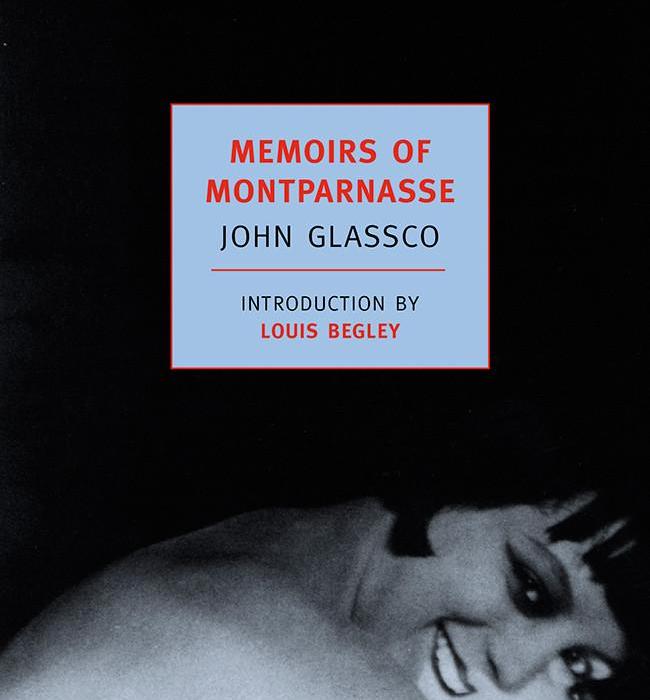
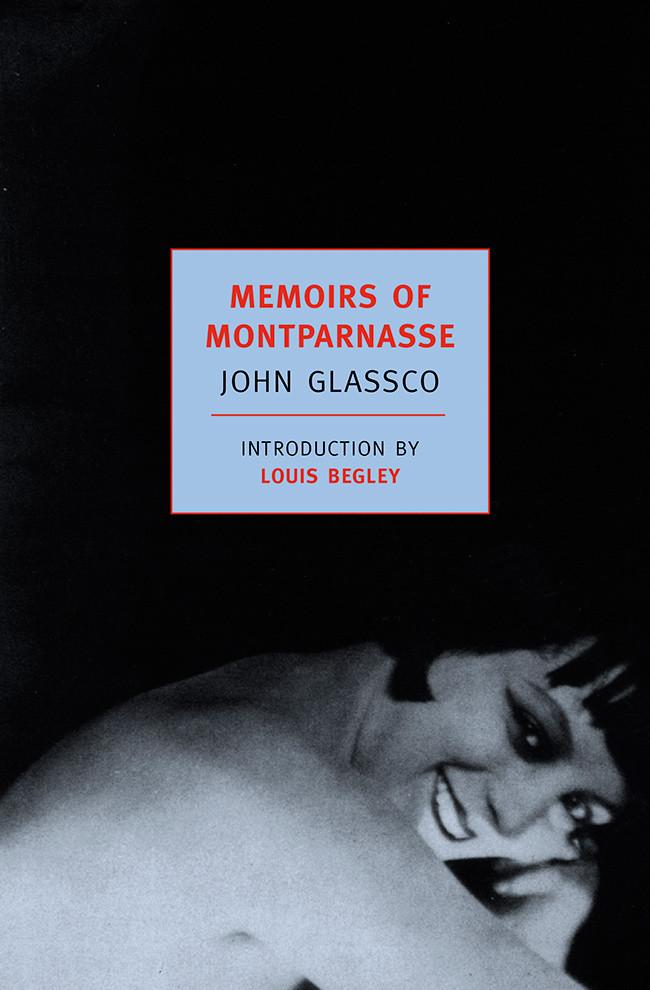 I haven’t re-read this book yet but brought it with me to Paris to do so. I remember it being even better than Hemingway’s memoir when I read it in my early twenties. Glassco was a Canadian poet who also escaped to Montparnasse between the wars when he was just seventeen, and wrote his memoir of that time when he was living out his middle age in the Eastern Townships, on long afternoons buoyed by gin. Glassco’s account is somewhat fictionalized, but it’s a great read with fantastic sweep, and lots of charming raunch.
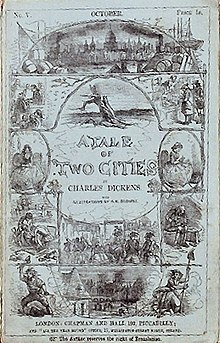 I’d long meant to read this Dickens, for the most part because it’s among his shorter novels. As I was reading it this summer I did wonder where he was going with the crazy plot for most of the book, but by the end all of the pieces he had set up in the first part did come together and the story clicked into gear towards a satisfying ending. Dickens doesn’t really take the time describe Paris very well, but his vicious take on both the corrupted aristocracy and the blood-thirty crowds of revolutionaries is fun. He spares no one–as long as they’re French! I’m growing a bit tired of Dickens’ female characters, however, who are always based on the same sweet passive model.
 This is one of James’ late, great masterpieces, and is the ultimate arriving-in-Paris read, so much so that I’ve been slowly savouring it since we arrived. James himself said that the best way to enjoy his books was to read about five pages a day, but to keep at it “without losing the thread.” In The Ambassadors, a wealthy American woman sends her middle-aged suitor, Strether, to Paris to convince her son, who may or may not be having an affair with a rich countess, to return to America. But then, against all odds, Strether begins to fall in love with Paris–the food, the artwork, the architecture, the atmosphere. As the novel progresses, it’s unclear who is corrupting whom. The pleasure of the novel is in witnessing Strether’s slow transformation, which sometimes looks more like self-delusion. The dialogues are also wonderfully witty.
 Geoff Dyer is one of those writers that I’m still not sure what to make of. I read his books and I can’t say I enjoy them, exactly, but they make me think, and I do keep coming back to his work. I picked this novel up by chance when I saw it at Blackwell’s in Oxford this summer. What a treat: compulsive, self-aware, elegantly written, sexy, melancholy. It’s about a group of expat friends living from party to party in Paris in the 1990s, and the inevitable moment when the parties have to end. Dyer is better known for his non-fiction, but this novel proves he can do fiction just as well.
 A follow-up to Binet’s sometimes frustrating but nonetheless compelling HHhH, his second novel is a crazy romp through the world of French philosophers in the early 80s. It begins with a simple but intriguing premise: the influential literary critic Roland Barthes died in 1980, struck by a van–what if he was actually murdered? The story is fast-paced and, in the end, becomes a little too heavy handed in its pastiche of Dan Brown-esque conspiracy thrillers, but the early scenes set in the houses and university offices of the likes of Derrida, Foucault, Deleuze, and Kristeva are a delight. My favourite cameo is by Umberto Eco, who is, of course, the smartest of them all.
 Charles-Adam Foster-Simard